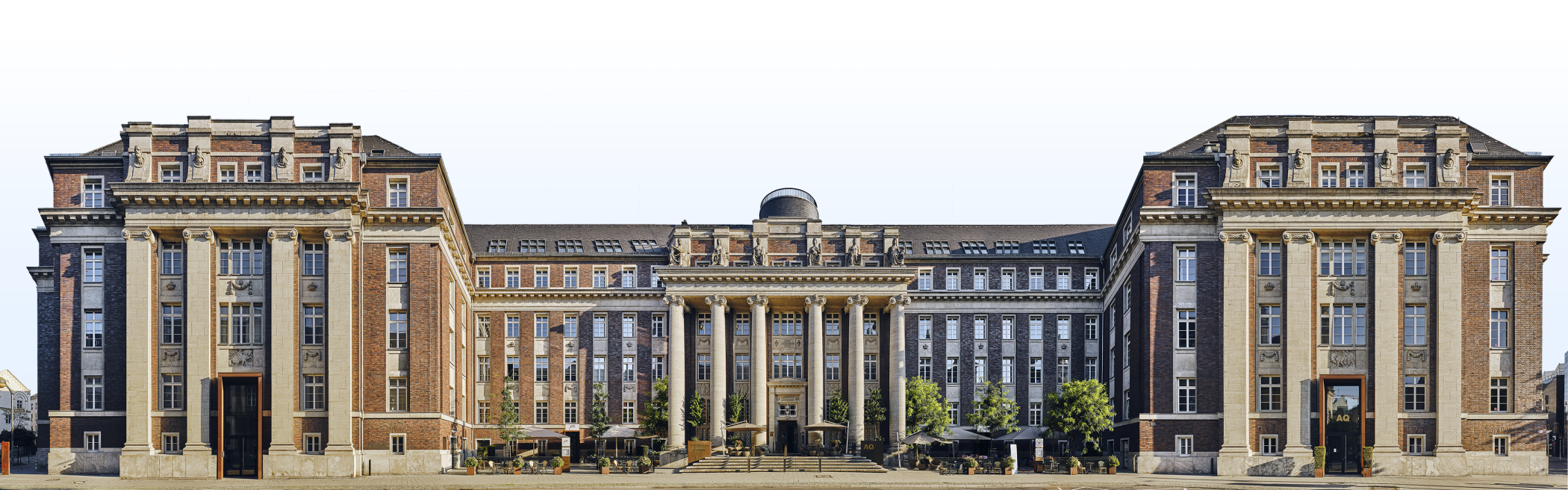
Thanks to the privileged location of The Wellem in the heart of Düsseldorf, almost all sights can be reached on foot in a maximum of 15 minutes, if not literally on the doorstep. Whether architectural icons from all eras, museums and art collections, opera and theater, top international restaurants and bars, Ratinger Straße with its brewery pubs and bars, the Königsallee shopping mile or the Rhine promenade and Hofgarten – there is something for everyone here.
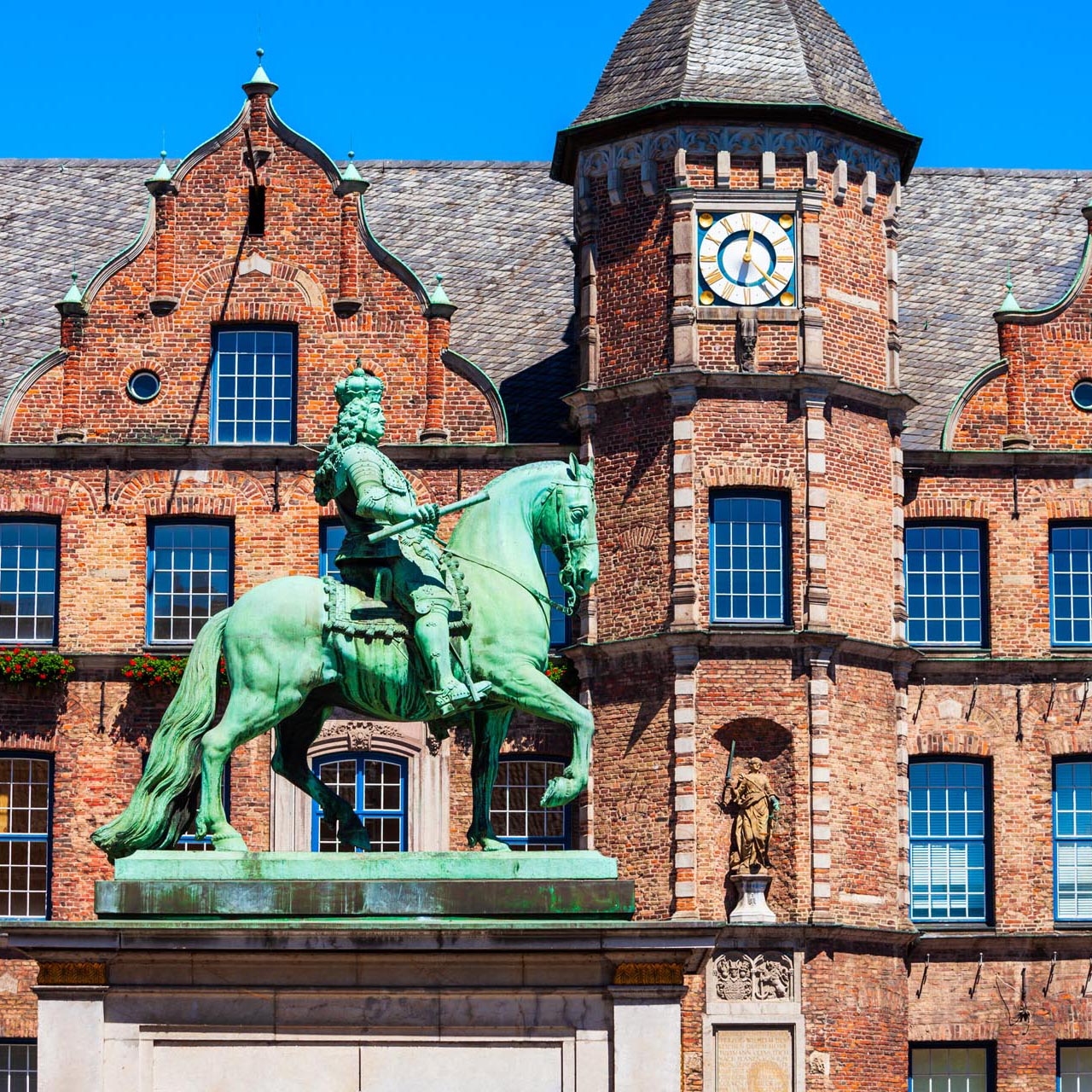
Düsseldorf’s town hall has dominated the market square in the old town for 450 years. A building that has been renovated and extended several times over the centuries. In front of the town hall, the equestrian monument to Elector Jan Wellem draws the eye. This impressive monument, which shows the Elector in all his glory, symbolically looks towards the Old Town and is considered one of Düsseldorf’s most important landmarks.
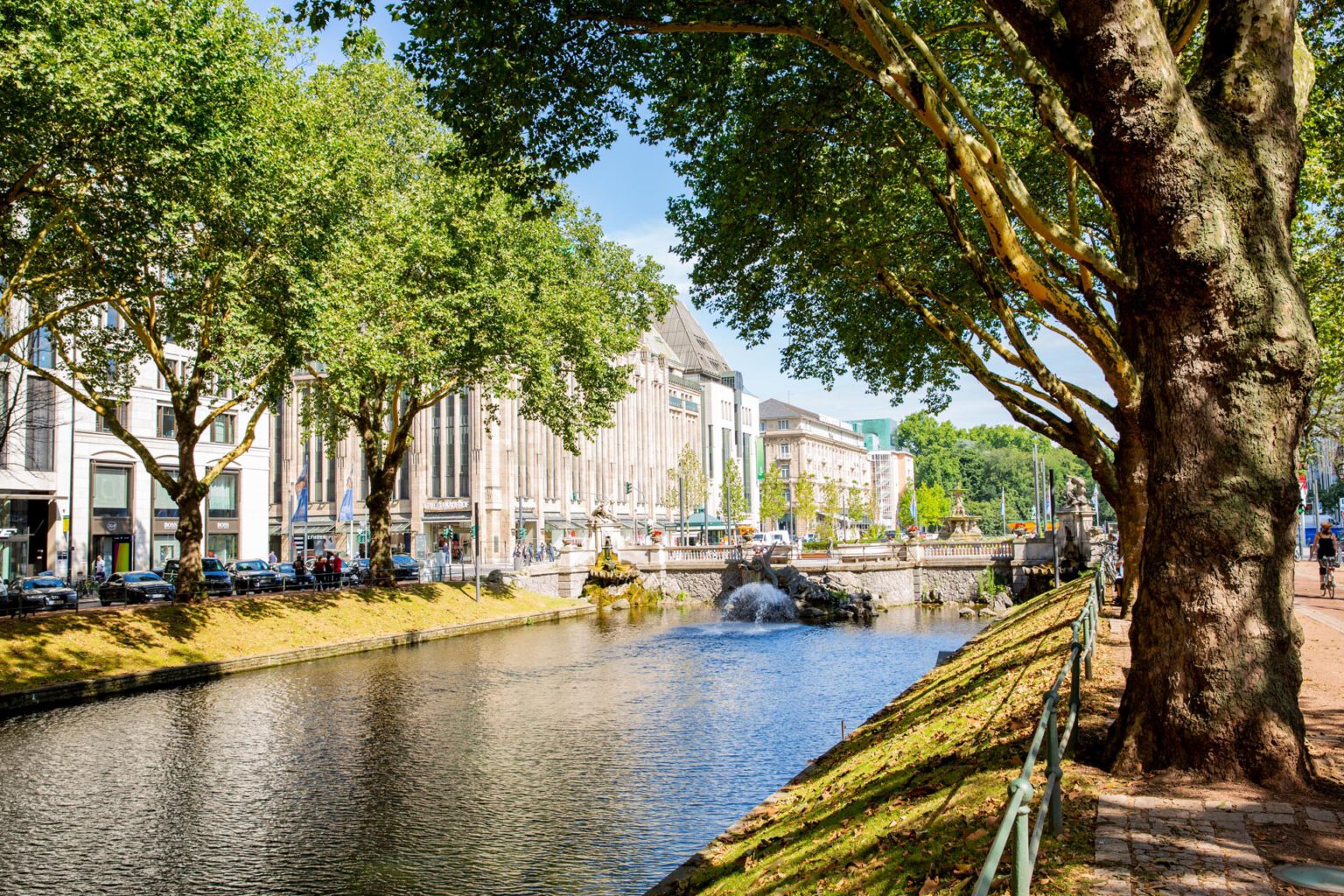
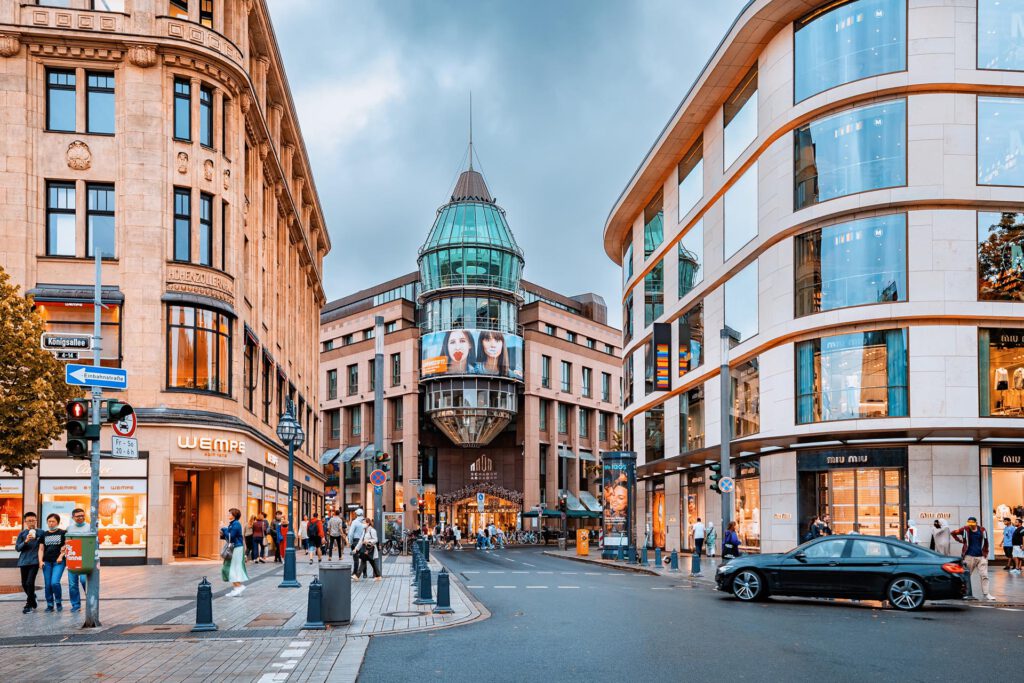
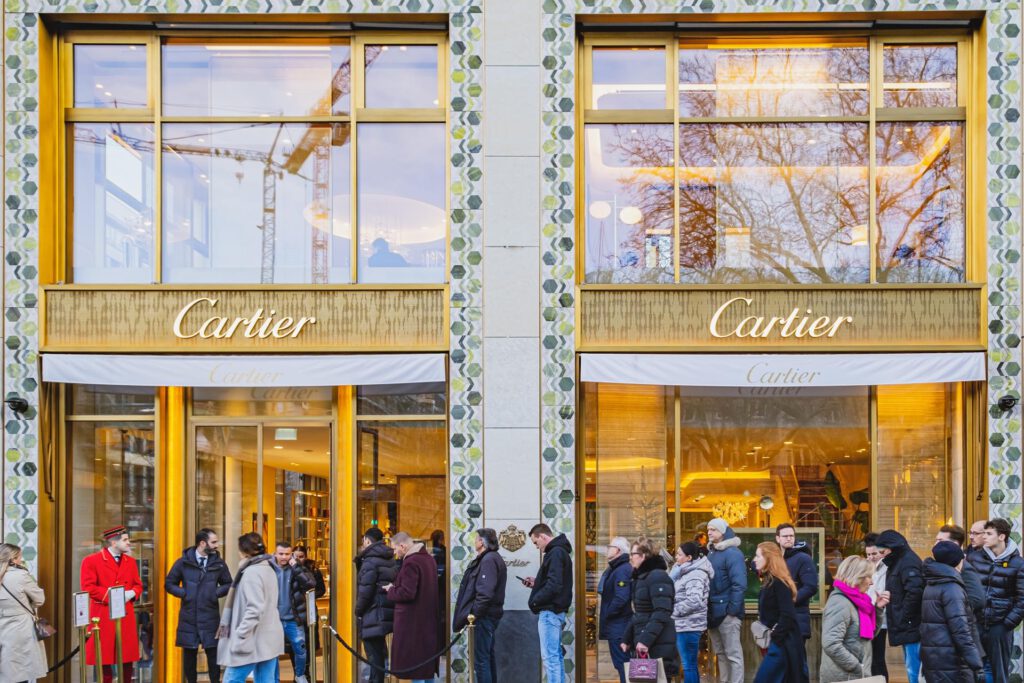
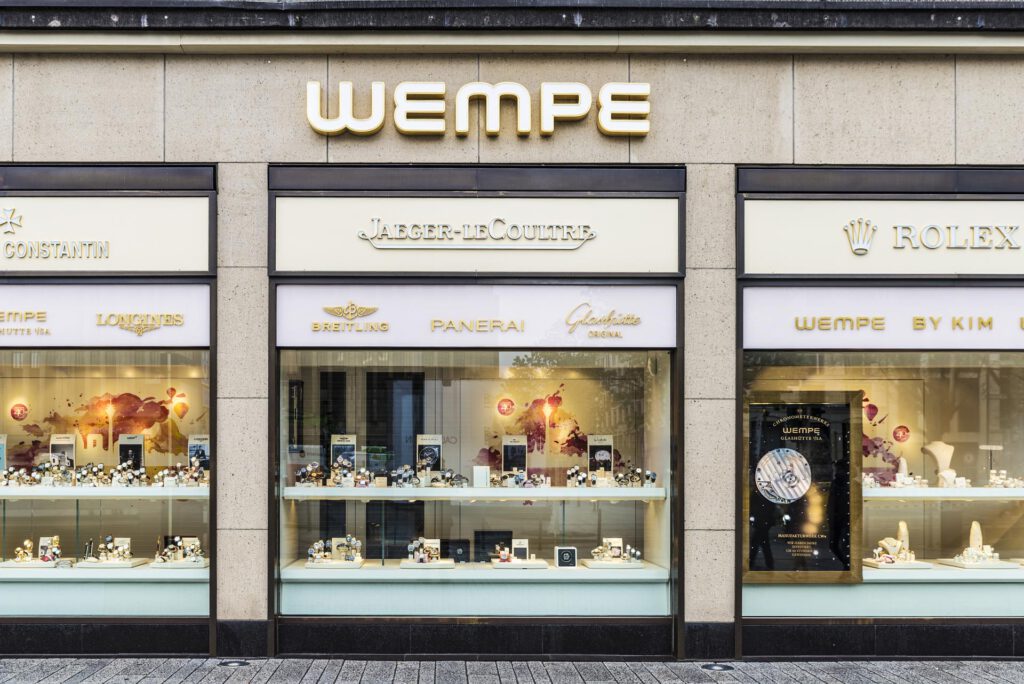
Königsallee, affectionately known as the “Kö”, is Düsseldorf’s most famous shopping street and a symbol of luxury and elegance. The magnificent boulevard, which stretches along a tree-lined canal, is lined with exclusive boutiques, designer stores and first-class restaurants. This is where traditional glamor meets modern architecture, making the “Kö” a magnet for fashionistas and strollers from all over the world. But Königsallee is not just a shopping mile, it is also a place to see and be seen – a center of social life in Düsseldorf.
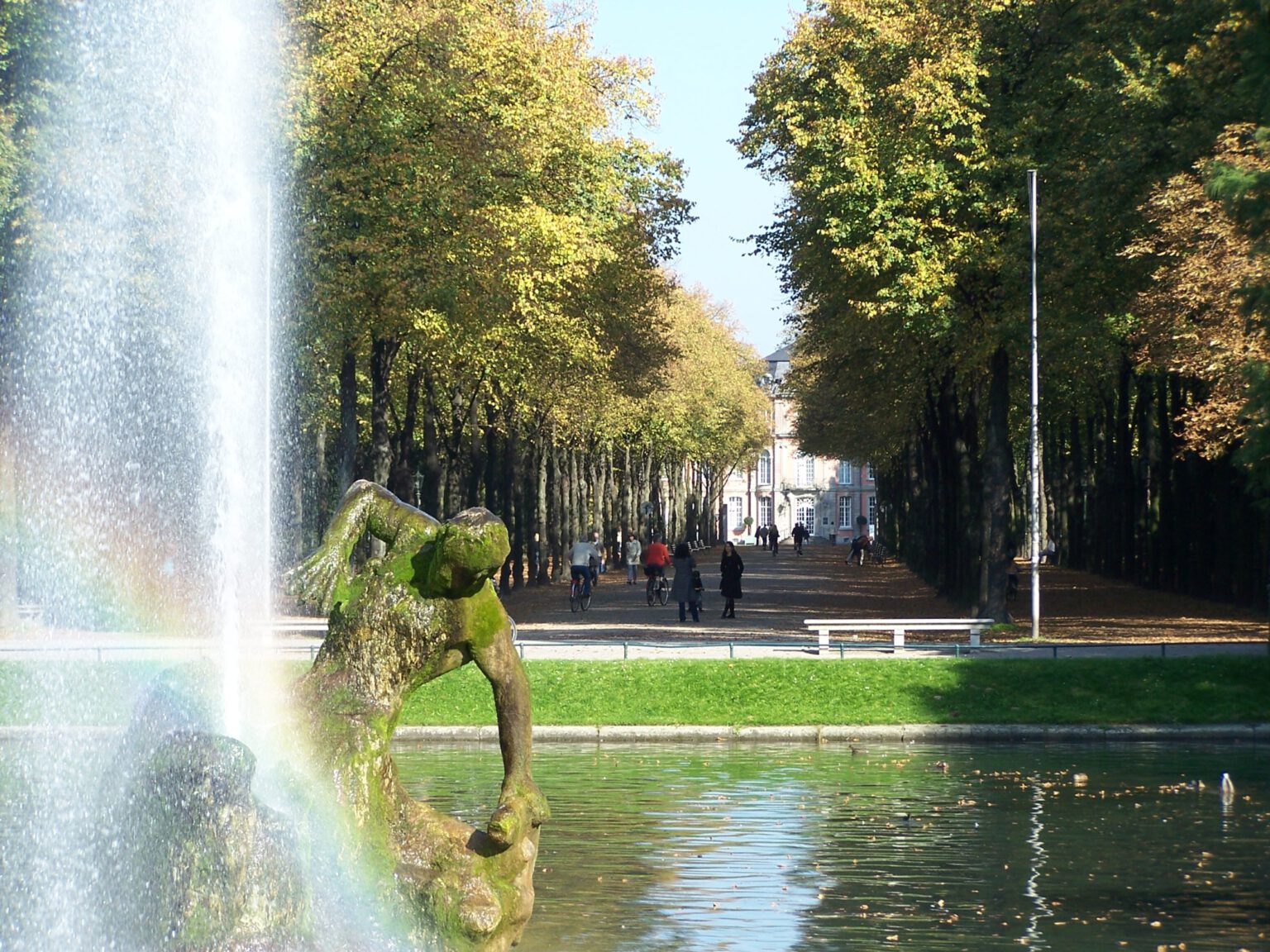
In the heart of the districts of Stadtmitte and Pempelfort lies the Hofgarten, an extensive park that has existed since 1769 and is considered to be Germany’s first public garden. Designed by Nicolas de Pigagethe green oasis was extensively renovated and modernized in 2002 as part of the “Decentralized State Garden Show” and EUROGA. With an area of around 27 hectares, the courtyard garden offers relaxation and a change from city life. Historical monuments and modern sculptures provide cultural highlights in the midst of nature. A popular destination for walks and relaxation in the countryside.
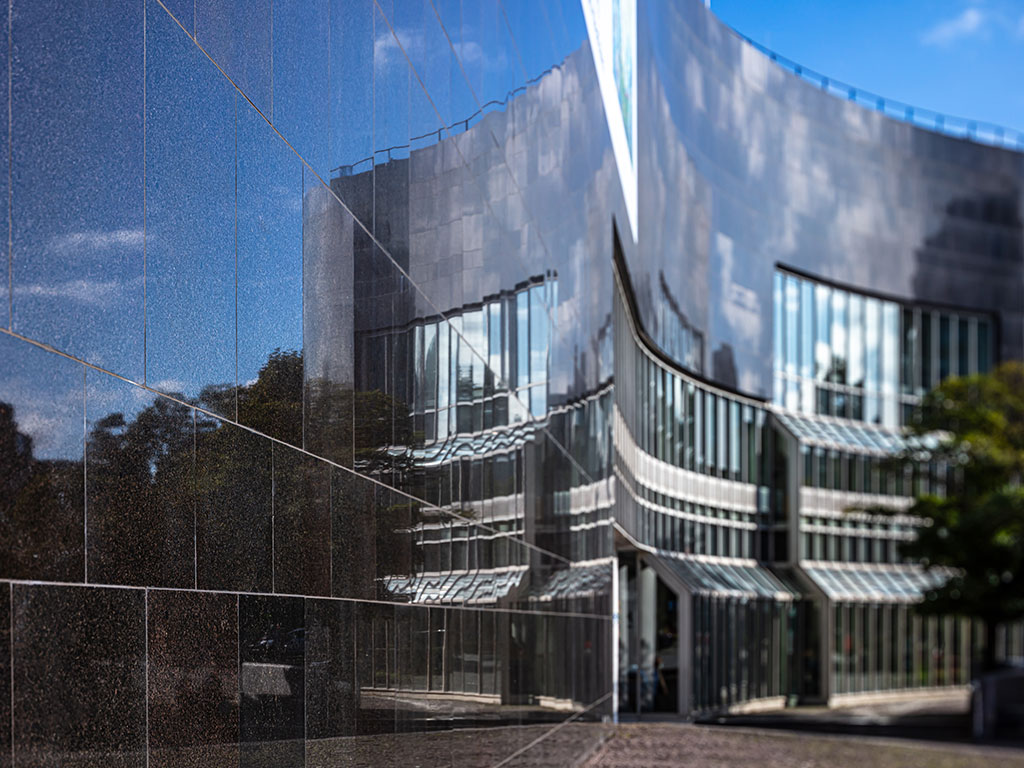
If you love art, Hotel The Wellem is the right place for you. The K20, one of the most important museums of modern art, is located in the immediate vicinity.
Masterpieces of the 20th century can be admired here, including impressive works by Picasso, Klee, Jackson Pollock and Katharina Fritsch. With the Kunstsammlung NRW’s K21 a little further away, the K20 occupies an outstanding position in the international museum landscape.
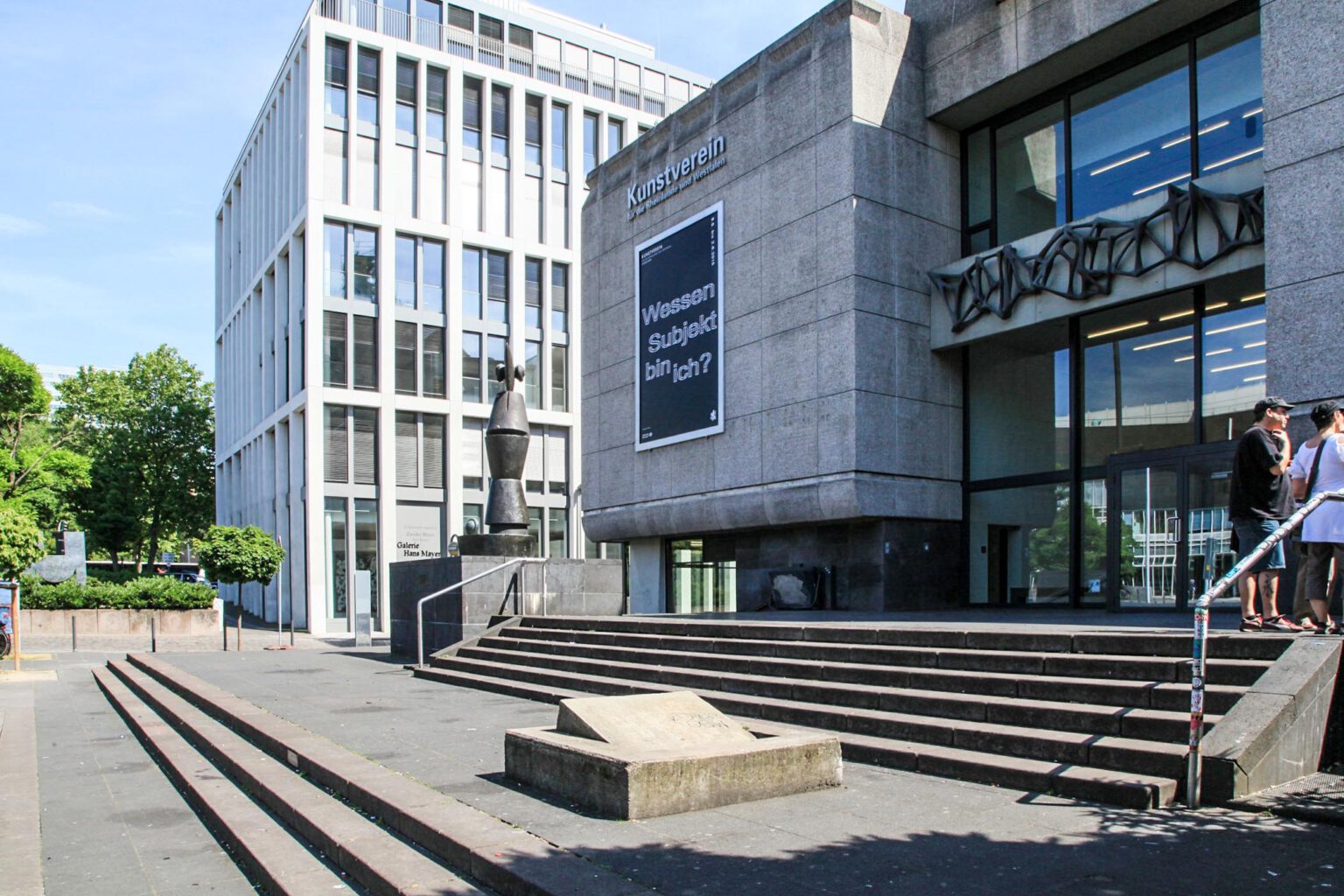
The Kunsthalle Düsseldorf is located directly in front of the entrance portal of The Wellem, opposite the K20. It concentrates on temporary exhibitions that focus in particular on young, contemporary artists.
Despite the focus on temporary presentations, some impressive works of art can be admired outside, which characterize the appearance of the building, such as the iconic stovepipe by Joseph Beuys.
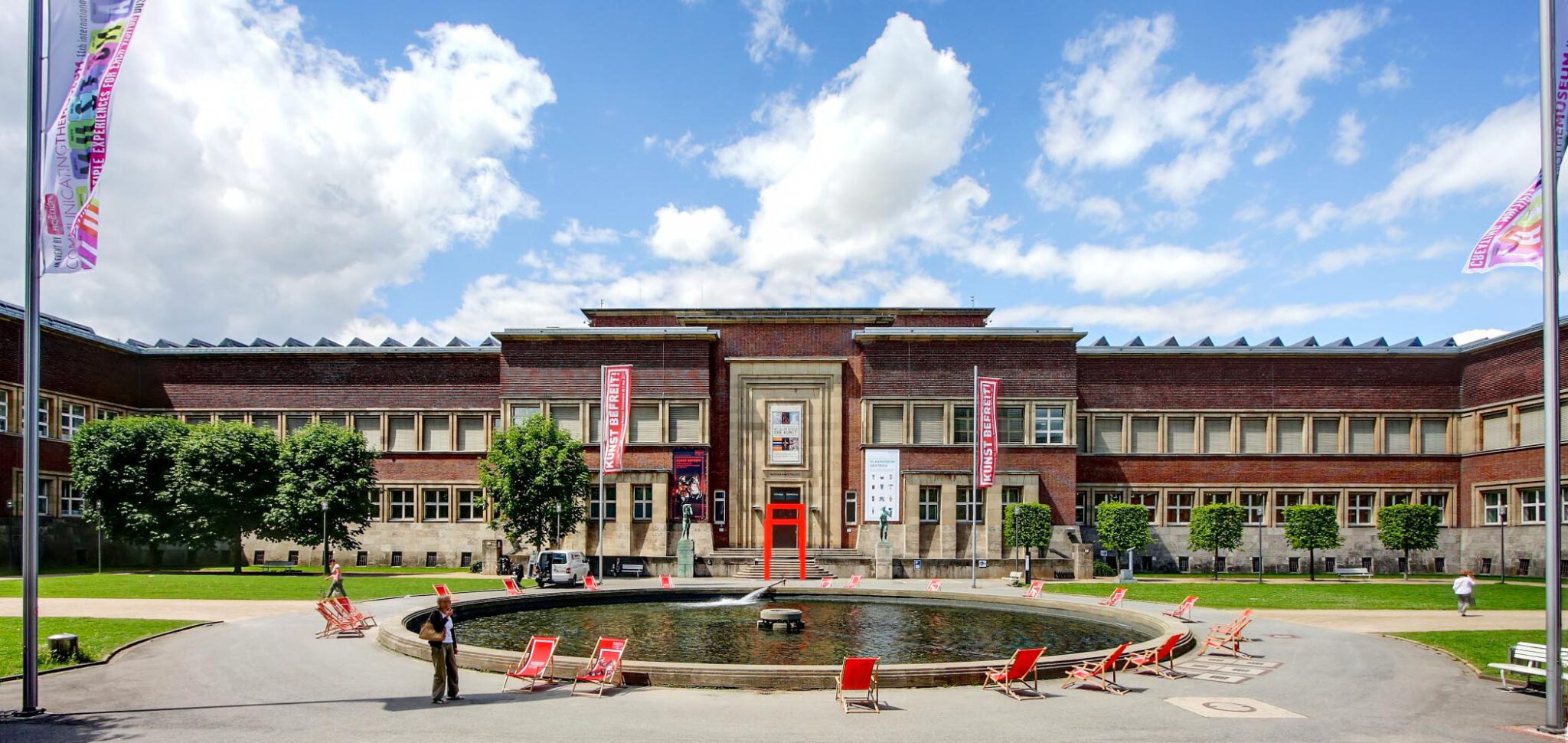
The Museum Kunstpalast is an essential part of Düsseldorf’s cultural life. With its numerous exhibitions and extensive collections, it offers a broad spectrum ranging from paintings by classical masters such as Jan Frans Druven to modernist works by Otto Dix.
Impressive glass techniques, graphic collections by Kunisada and Kuniyoshi as well as outstanding sculptures and applied art complete the diverse range of exhibits. In addition to visual art, the Museum Kunstpalast also offers an acoustic experience.
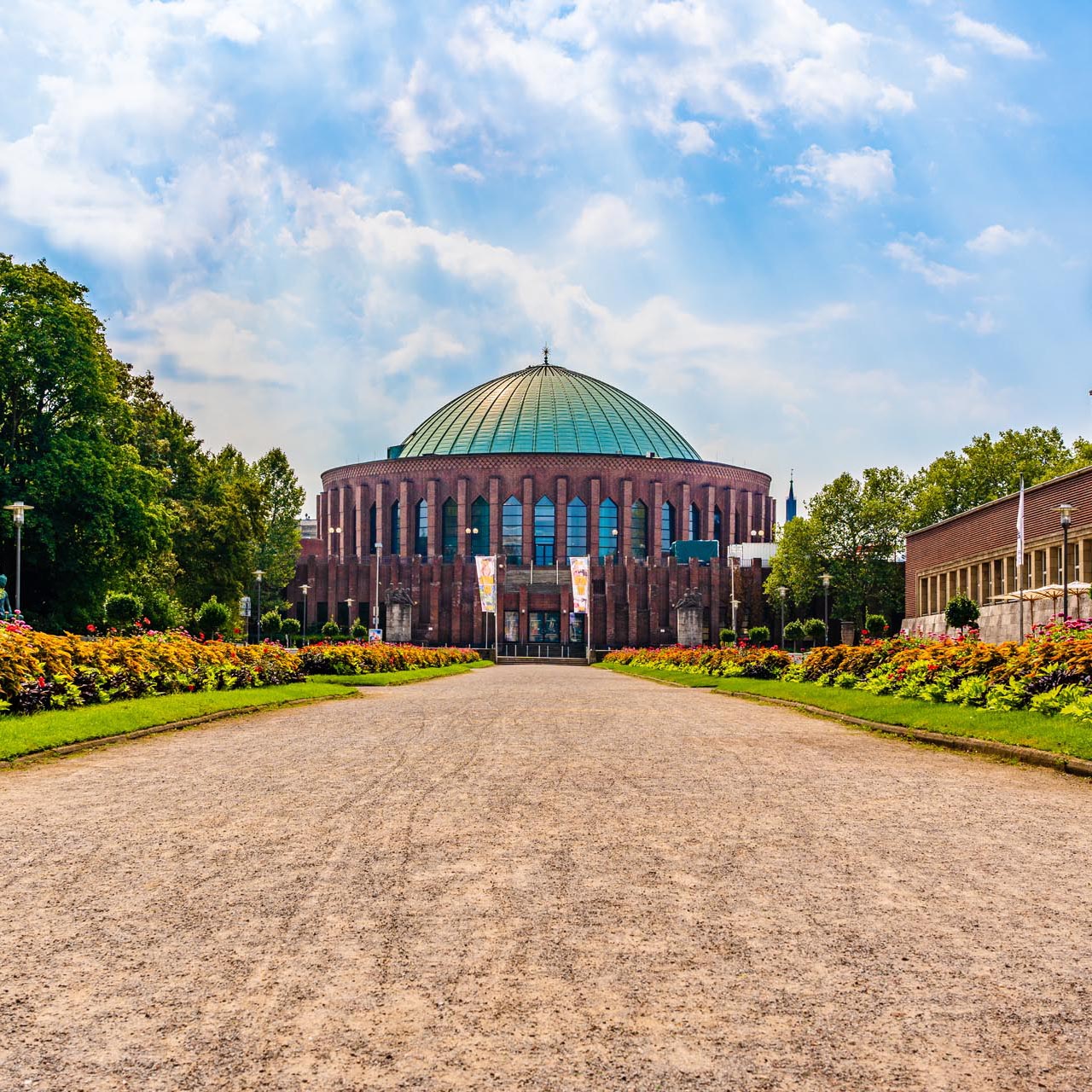
The Ehrenhof, an impressive expressionist ensemble of buildings, was completed in 1926 according to the plans of the renowned architect Wilhelm Kreis. The exhibitions in the NRW-Forum and Museum Kunstpalast in particular make the Ehrenhof a cultural magnet.
The neighboring Tonhalle, also the work of Wilhelm Kreis, impresses with its neoclassical rotunda. As a concert hall, it provides a stage for international stars from a wide range of genres, from classical music and jazz to chanson, soul and cabaret.
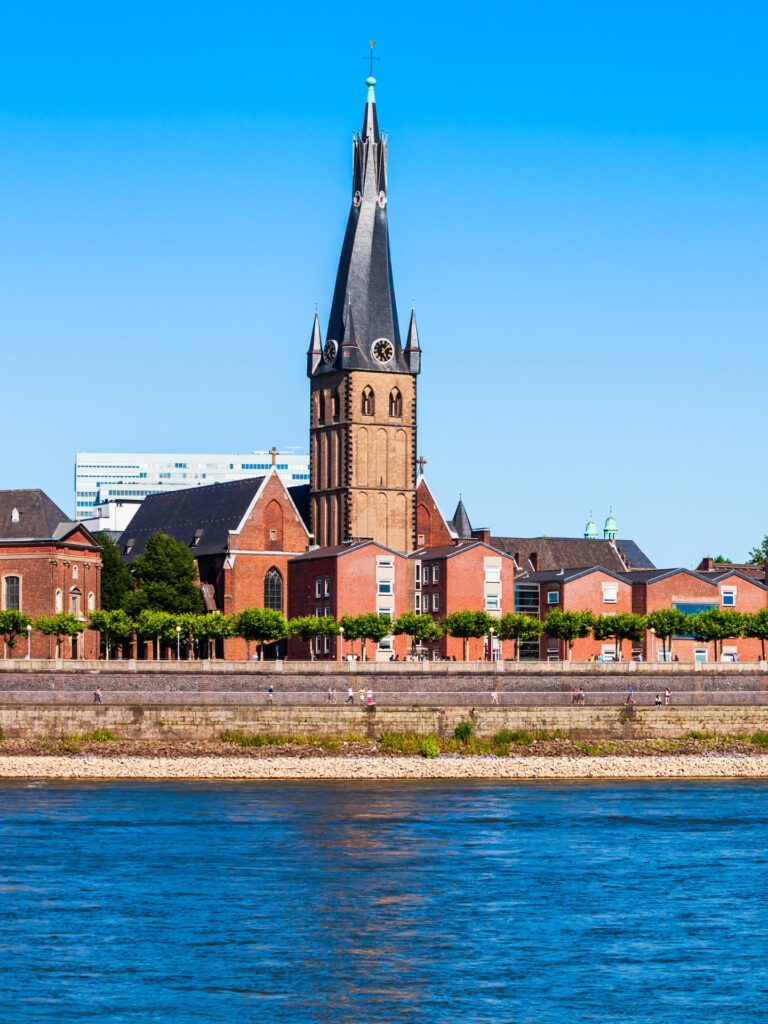
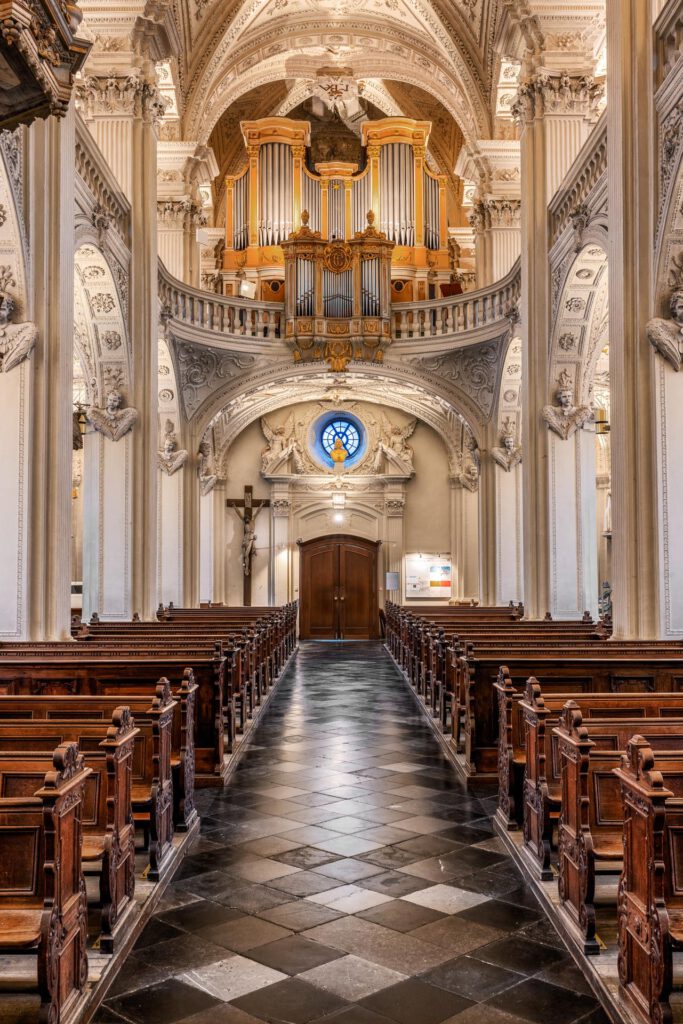
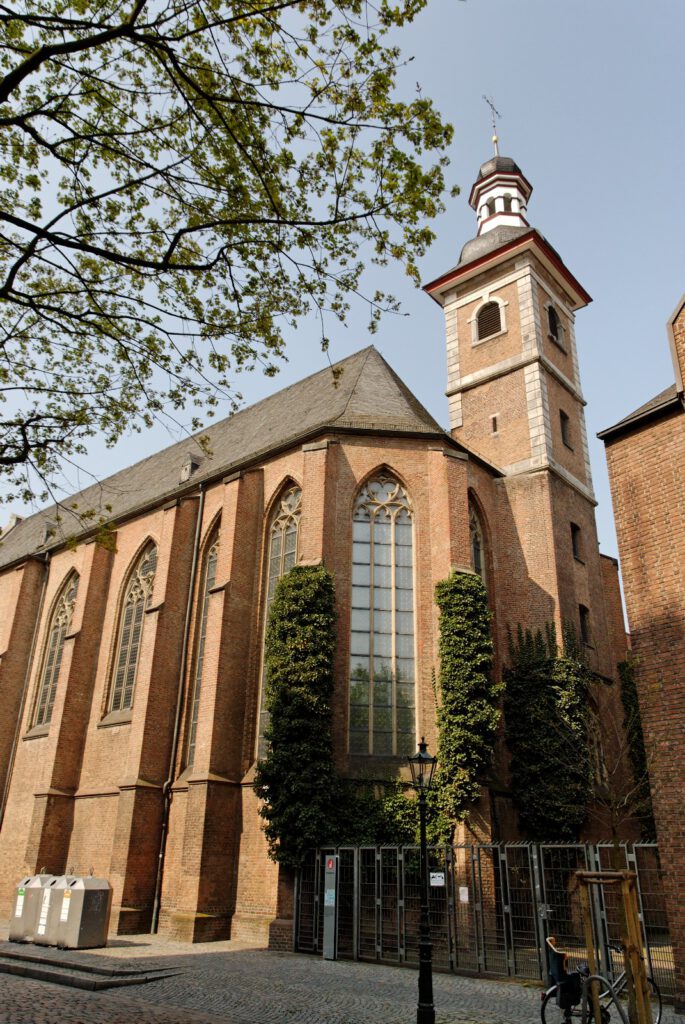
The churches of St. Lambertus, the Kreuzherrenkirche and St. Andreas are among the most important sacred buildings in Düsseldorf’s old town and reflect different eras of ecclesiastical architecture. Together they tell the story of Düsseldorf’s art and architectural history from the Middle Ages to the early modern period.
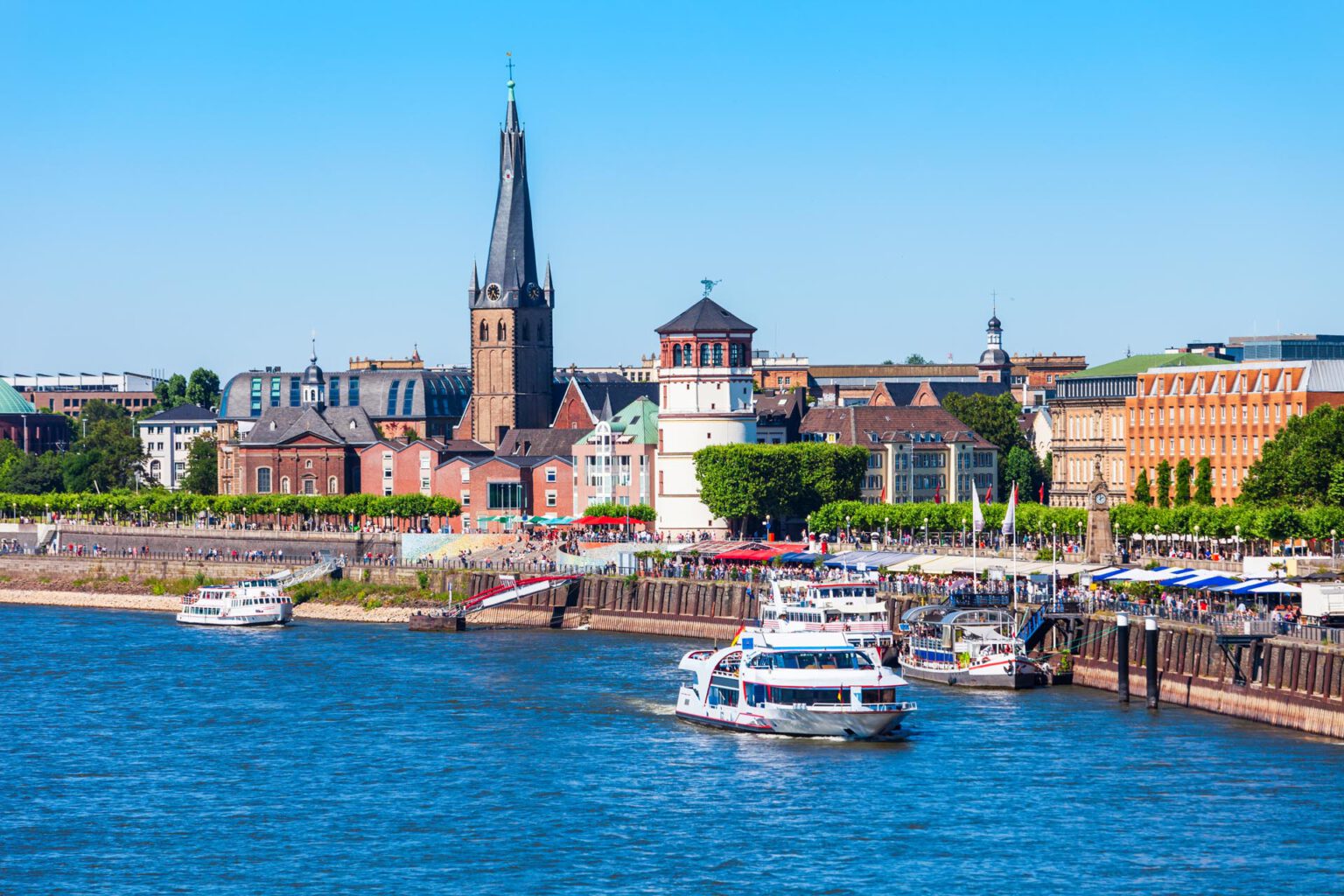
St. Lambertus, whose origins date back to the 13th century, is an outstanding example of Rhenish Brick Gothic and dominates the cityscape with its characteristic leaning tower.
St. Andreas, built in the early 17th century as a Jesuit church, ultimately marks the transition to the Renaissance and early Baroque and impresses with its representative spatial effect and rich furnishings.
The Kreuzherrenkirche was built in the 15th century and stands for late Gothic monastery architecture, characterized by simplicity and spiritual concentration.
The Rheinuferpromenade, which stretches along the Rhine from the Tonhallenufer, Schlossufer and Rathausufer to the Mannesmannufer, connects the city of Düsseldorf with the water. Originally laid out around 1900it consisted of two levels: the lower one was used for shipping traffic, the upper one as a promenade. The promenade was extensively redesigned in the 1990s and has since received several awards. Today it is one of the most popular promenades in Düsseldorf.
To provide you with the best possible experience, we use technologies such as cookies to store and/or access device information. If you consent to these technologies, we may process data such as your browsing behavior or unique IDs on this website. If you do not consent or withdraw your consent, this may affect certain features and functions.