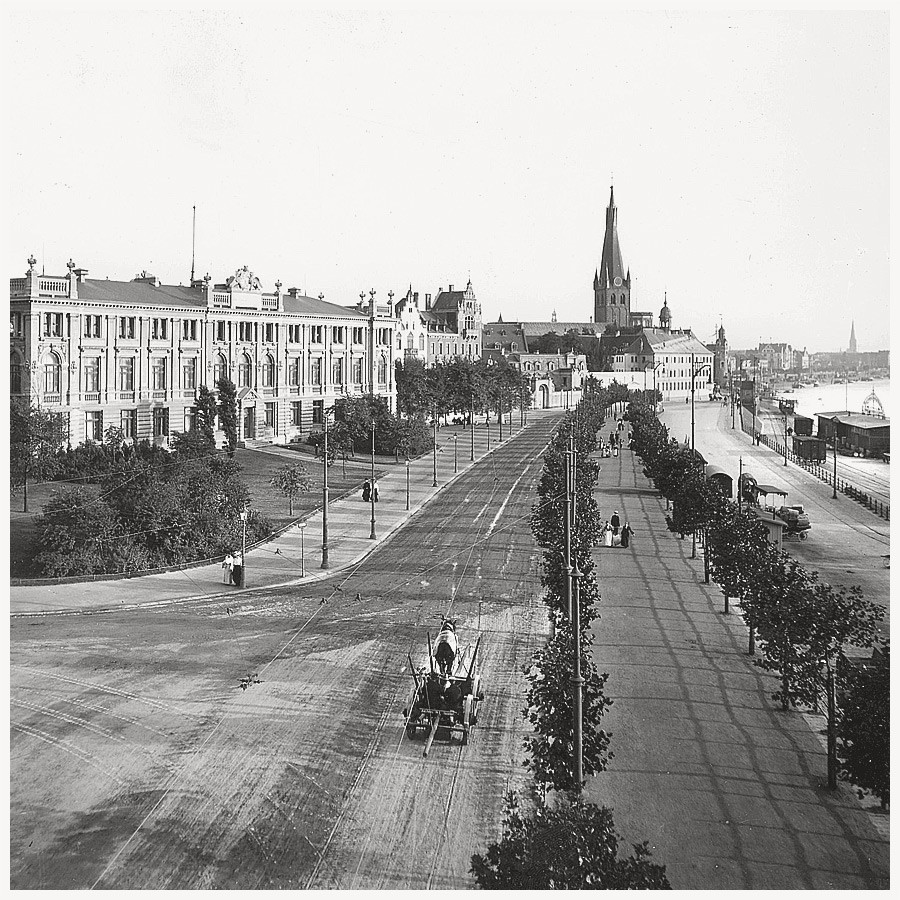
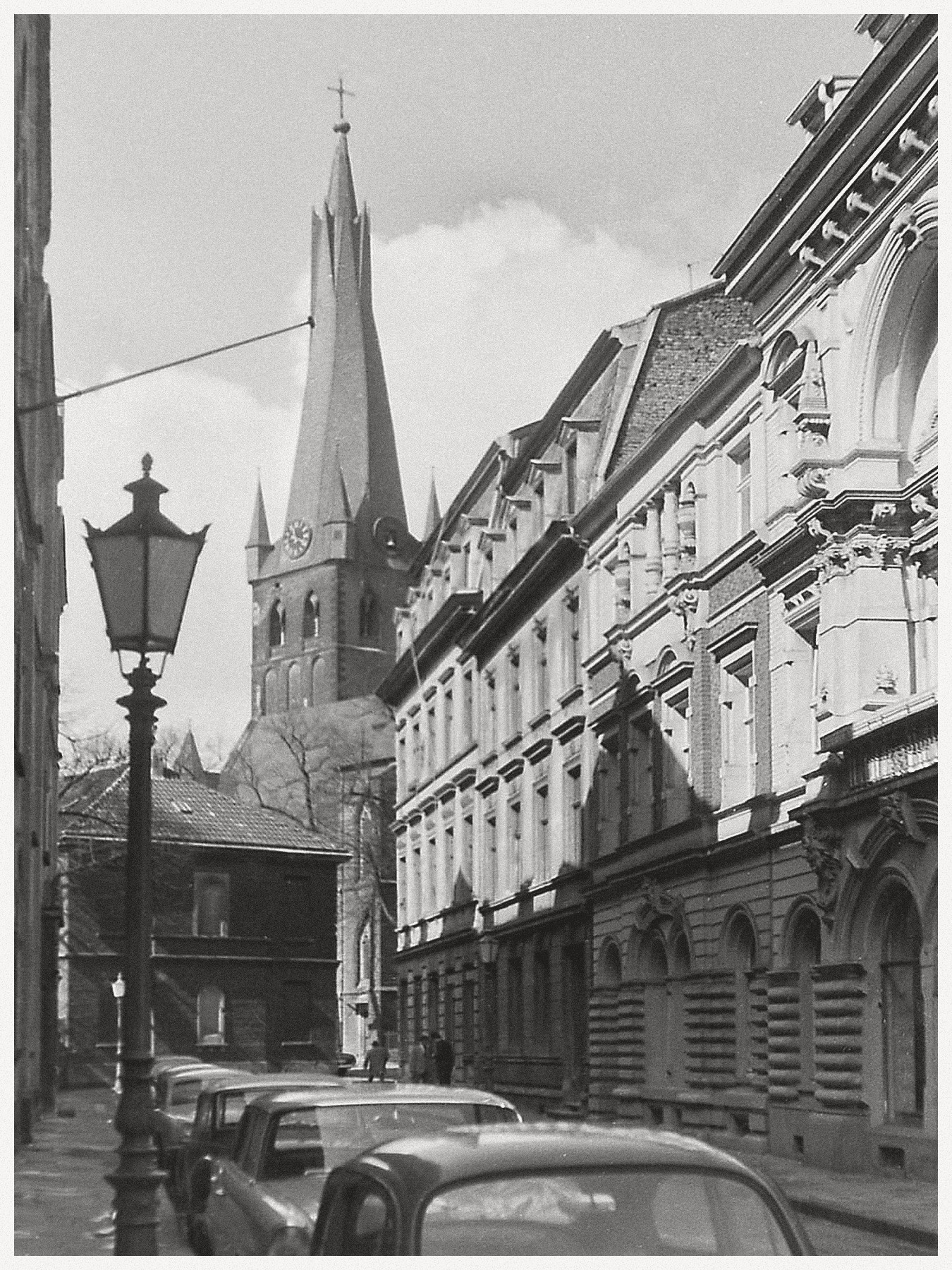
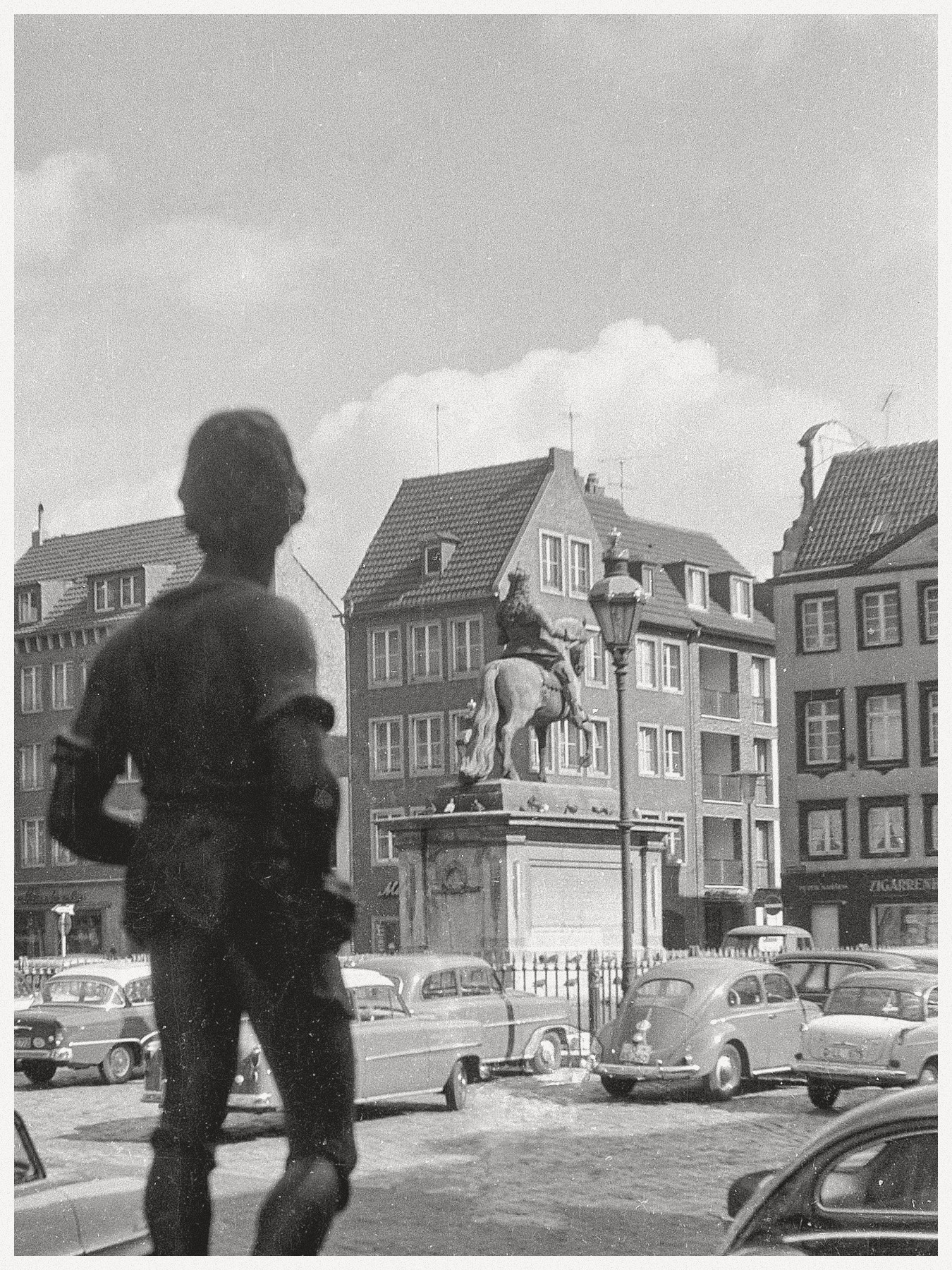
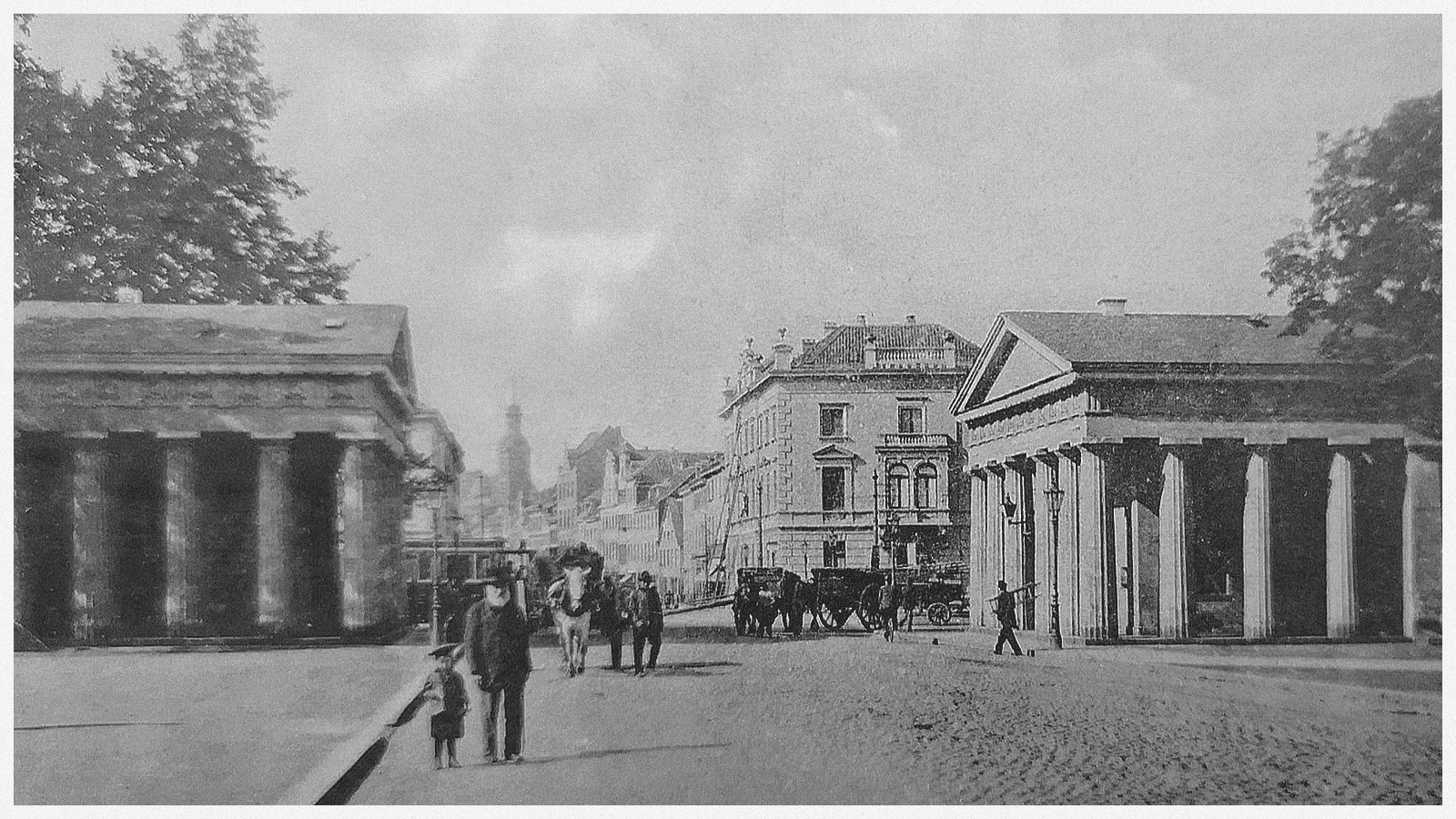
Today, The Wellem Hotel is an integral part of the ANDREAS QUARTIER – named after the neighboring former court and Jesuit church of St. Andrew. However, the location was apparently in high demand long before Düsseldorf was founded. This is at least indicated by finds from the Germanic period that were made during construction work. Shards of Venetian glass in turn attest to the prosperity of the inhabitants in later eras. Although the area was still at the gates of the later city at that time, an estuary of the Düssel, after which Düsseldorf was named and which still runs under the hotel as a canal, seemed attractive to the settlers.
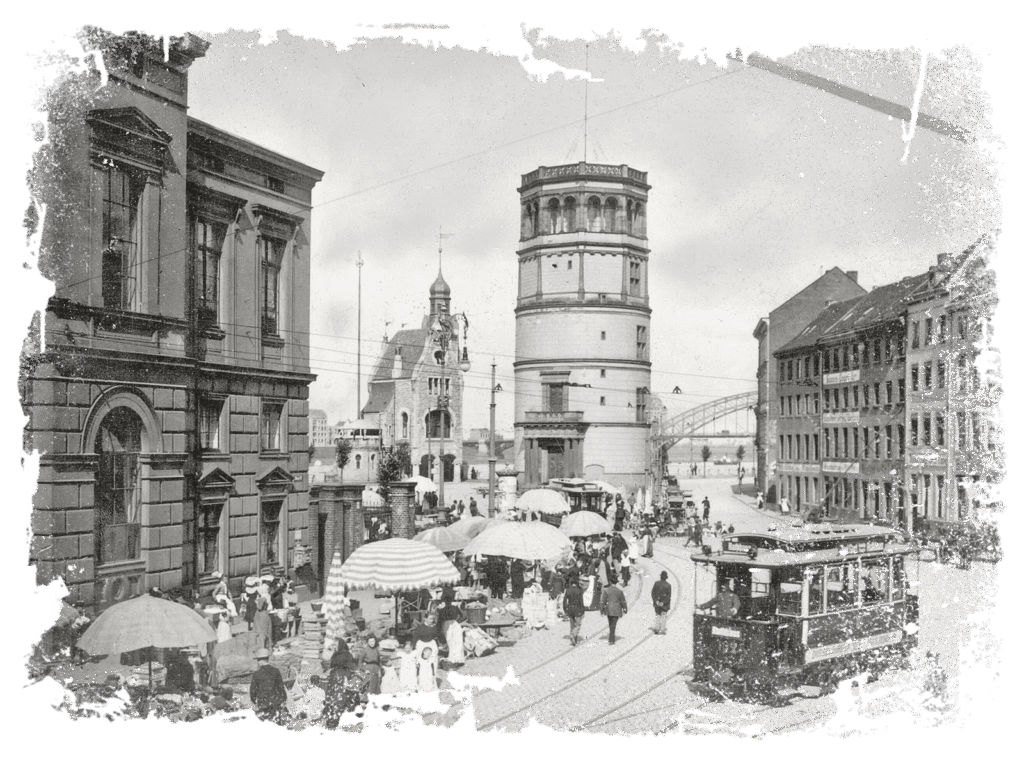
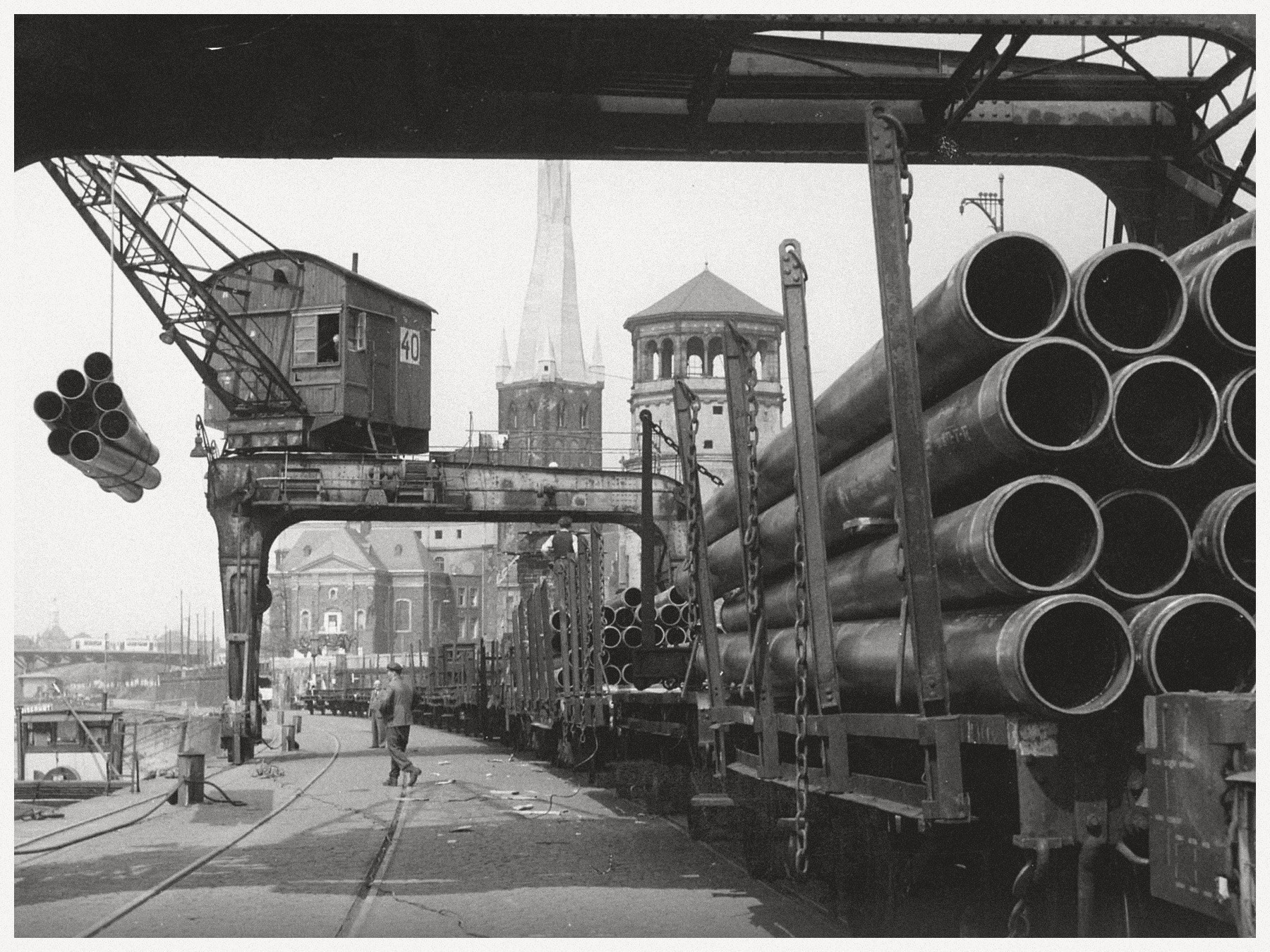
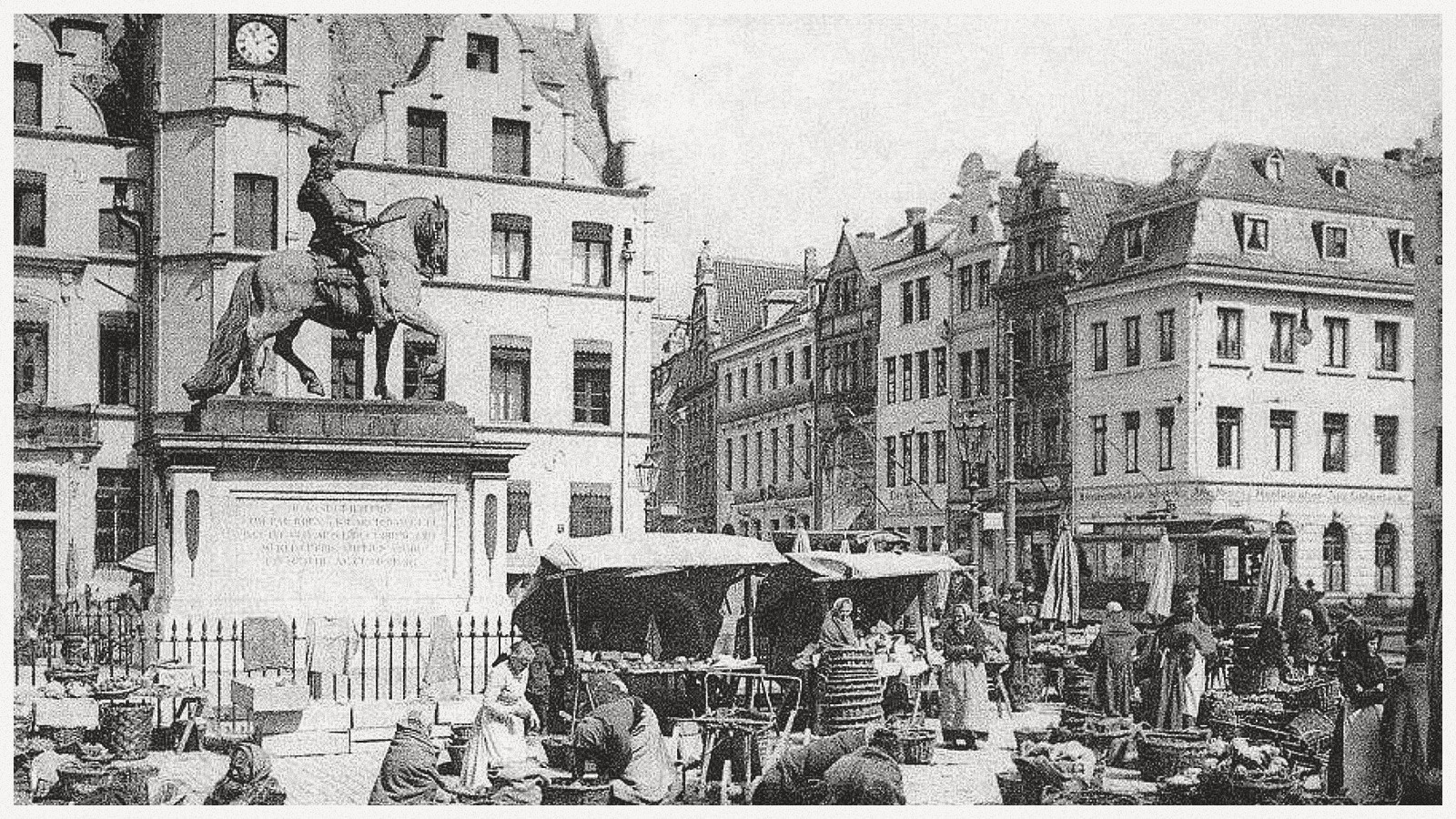
In the late Renaissance and early Baroque period, Düsseldorf was on the rise as a residential city. The site of the later hotel was used for the city’s first opera house and as a stomping ground for the ducal riding school. This was followed by the governor’s palace of the Duke of Jülich and Berg, whose former stone portal can be seen today on a wing of The Wellem Hotel.
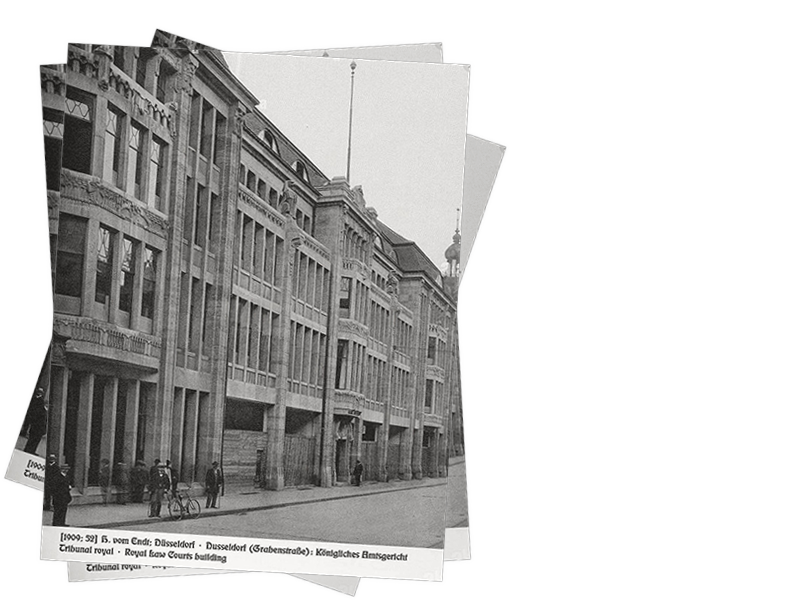
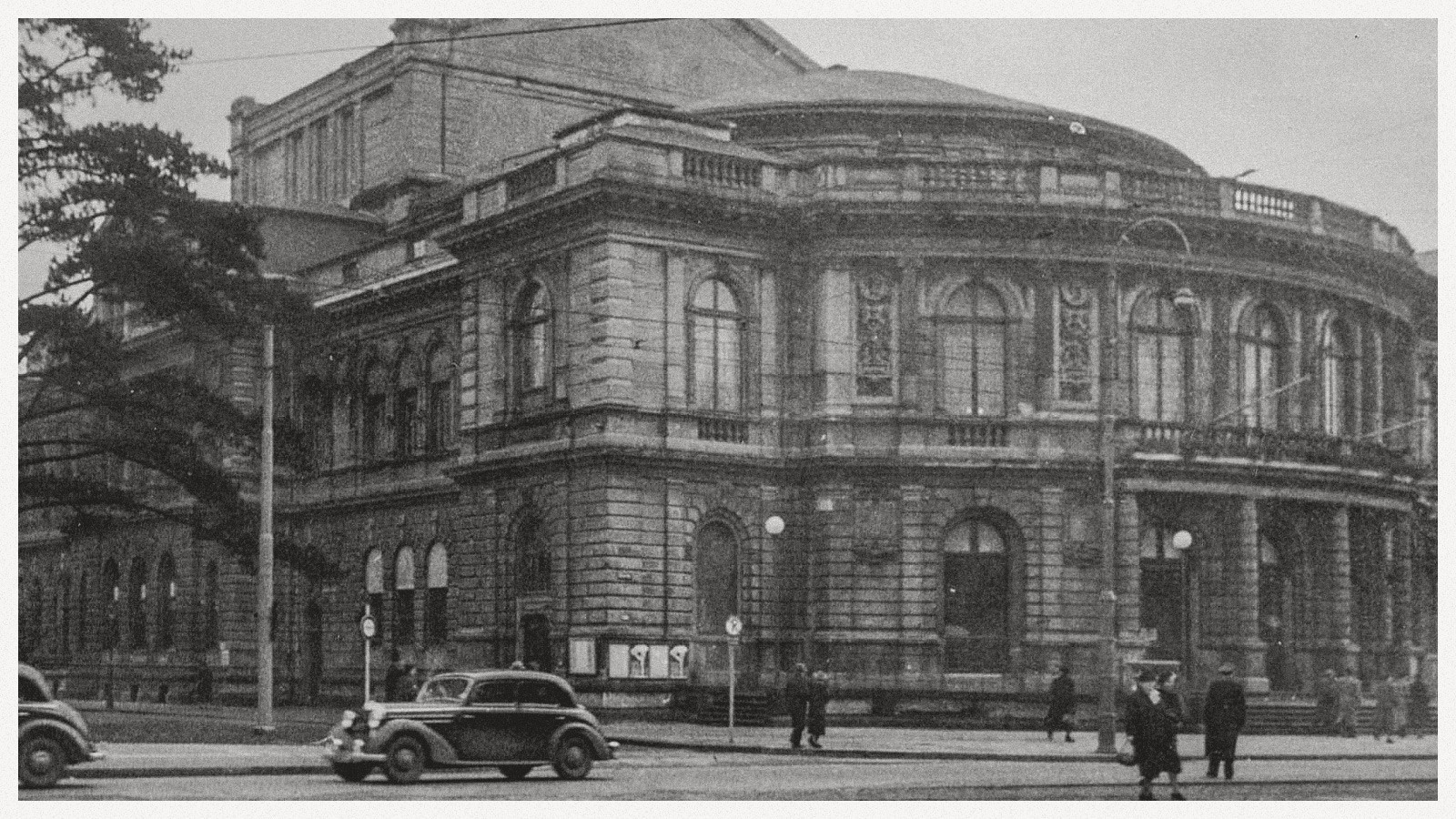
In 1913, construction work began on the new court building on the site of the old early classicist governor’s palace. Construction work lasted until 1923 due to the First World War. The origins of the Düsseldorf district court date back to 1811, when the Düsseldorf Justice of the Peace Court was established in the Grand Duchy of Berg. In 1820, this court was subordinated to the newly created district court of Düsseldorf, which in turn emerged from the district court that had been established after the Prussian takeover of the Bergisch courts in 1814.
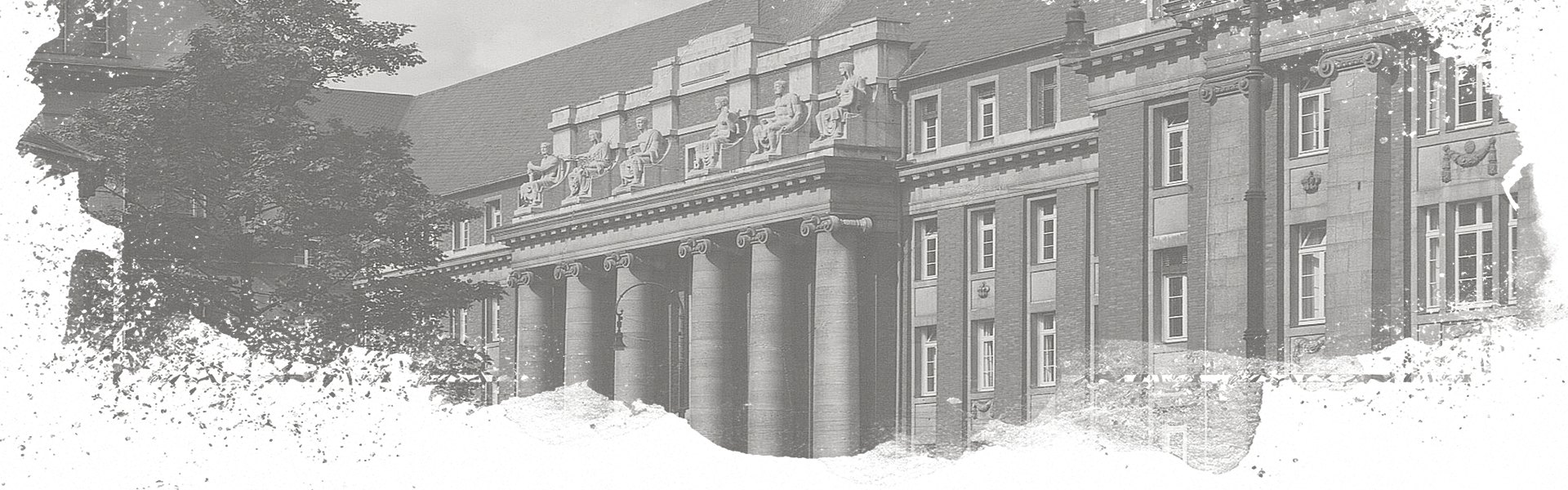
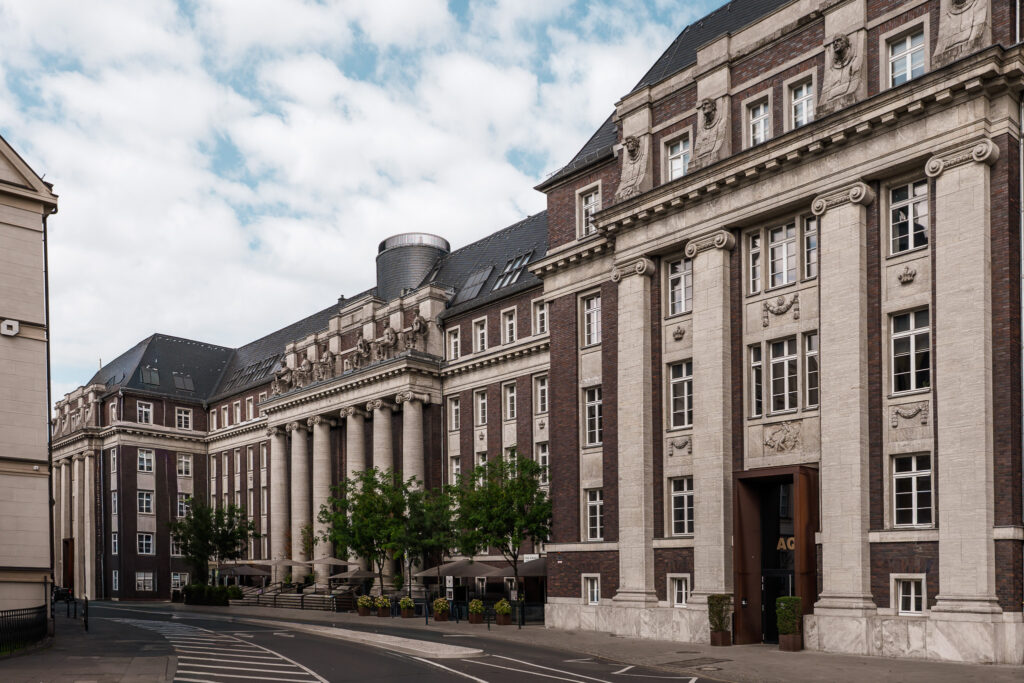
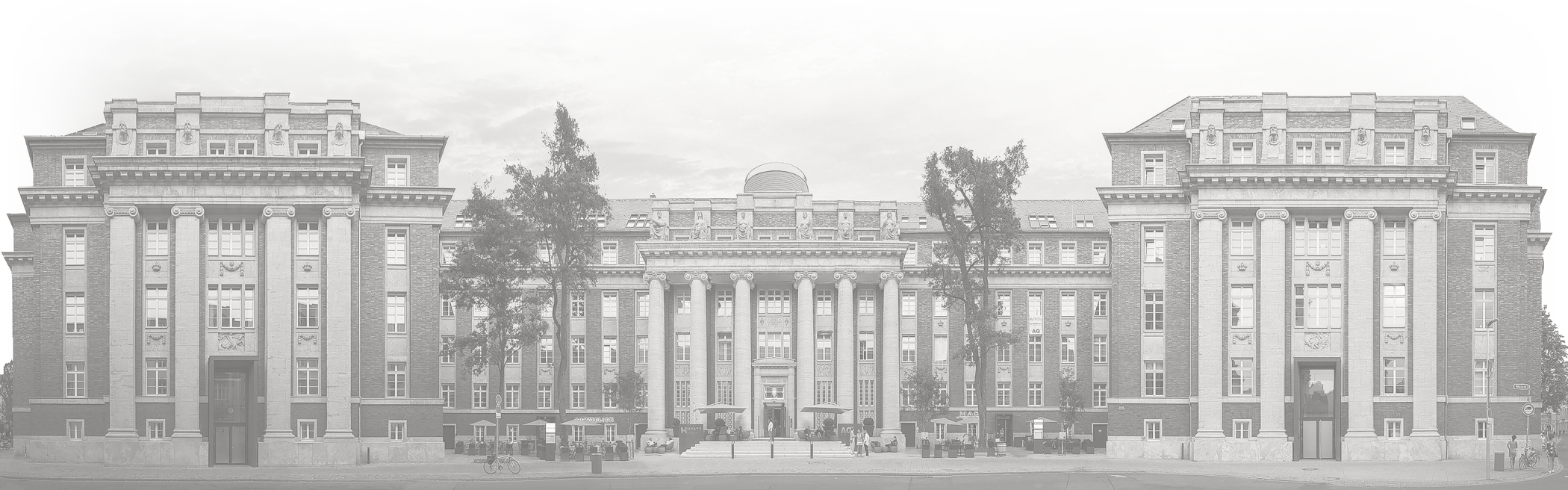
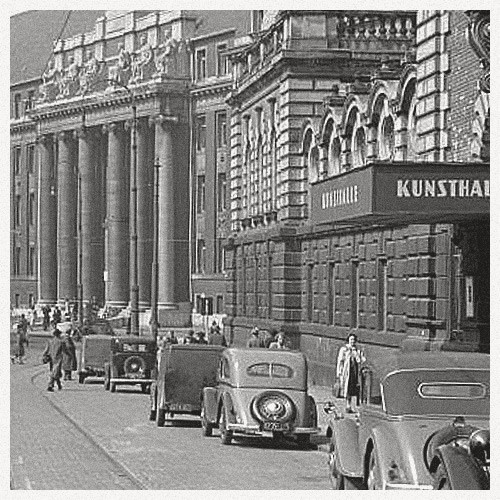
Architect Felix Dechant designed the building as a multi-winged complex grouped around five atriums. The street-side façade of the neo-baroque building was faced with clinker bricks, echoing the early modern brick architecture of the old town.
Ionic columns and allegorical figures above them adorn the magnificent portal and give it its special character.
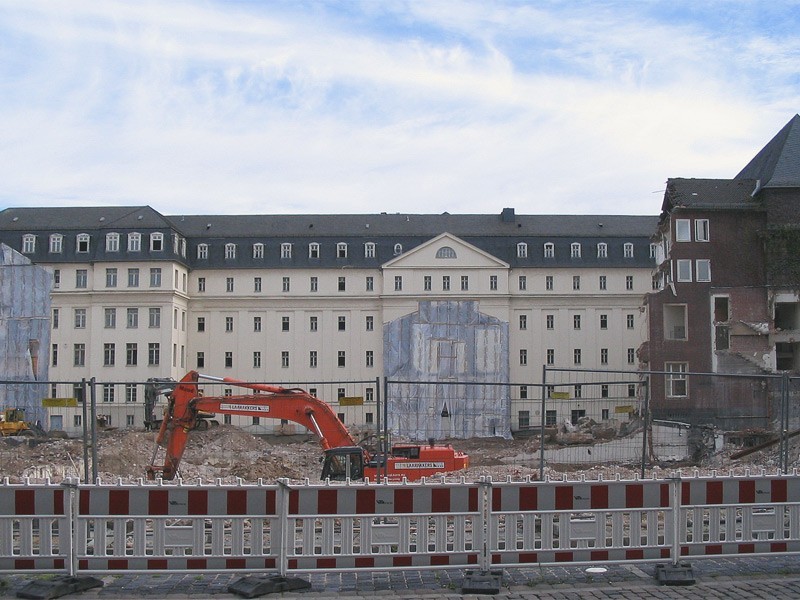
In 2007, real estate project developer FRANKONIA Eurobau acquired the almost 18,000 square meter site, including the former court buildings. In addition to The Wellem Hotel and the restaurant areas, mainly luxurious residences were planned in the listed section. The administrative buildings that were not worth preserving were demolished and replaced by modern new buildings with residential and office use as well as green garden courtyards.
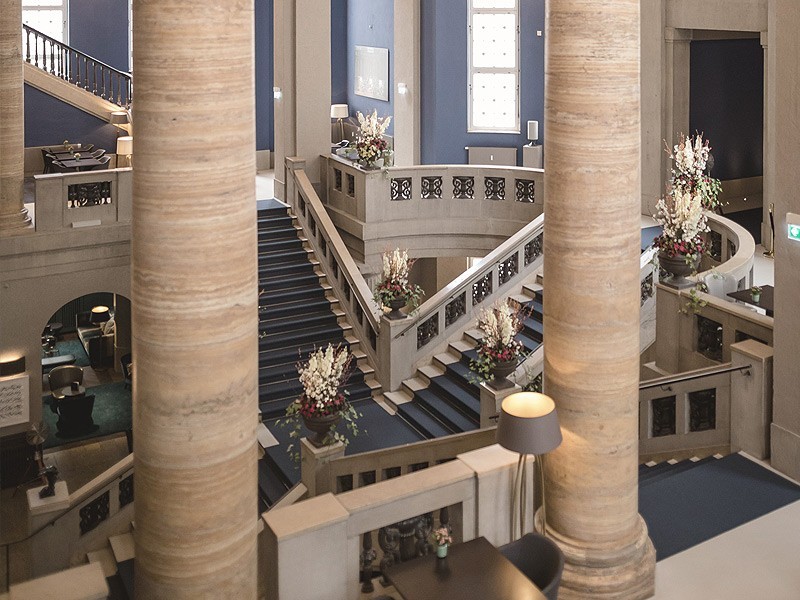
The conversion of the historic building into modern hotel, residential and commercial space presented the planners with numerous challenges. In particular, the preservation of the listed areas such as the entrance hall and corridors was controversial. In the end, the decision was made to largely preserve the extensive circulation routes. This formed the basis for the “living room of Düsseldorf” in its current form and use.
Andreas Quartier, with Hotel The Wellem at its heart, is now a lively district that has a lot to offer both residents and visitors. With its restaurants, cafés and cultural facilities, it is a place of encounter and enjoyment. The careful integration of historic buildings into a contemporary utilization concept has created a new urban space that preserves Düsseldorf’s rich history while meeting the needs of today’s urban society. The central location between Königsallee and the banks of the Rhine also makes the quarter an ideal starting point for exploring the city.
To provide you with the best possible experience, we use technologies such as cookies to store and/or access device information. If you consent to these technologies, we may process data such as your browsing behavior or unique IDs on this website. If you do not consent or withdraw your consent, this may affect certain features and functions.